

QOZ 2.0 is permanent. A 2027 healthcare fund is on the table.
The 2025 OBBBA made Opportunity Zones a permanent part of the tax code and added a stronger rural tier. Here is what changed in plain English — and early information on a senior-care fund Fremont Developers may bring in 2027.
What QOZ 2.0 actually changed.
The original Qualified Opportunity Zone program, created by the 2017 Tax Cuts and Jobs Act, was an experiment with an expiration date — new investments were set to lose the program's benefits after December 31, 2026. The One Big Beautiful Bill Act (OBBBA), signed into law in July 2025, changed that in two ways that matter to anyone planning around a capital gain.
First, the program is now permanent. Instead of a single cliff, QOZ 2.0 uses a rolling deferral period and refreshes zone designations over time. The next set of designations and the new rules are expected to take effect January 1, 2027.
Second, OBBBA added an enhanced rural tier. A Qualified Rural Opportunity Fund — one that deploys into a zone made up entirely of a rural area — is described as receiving a 30% year-five basis step-up instead of 10%, and a reduced substantial-improvement threshold. That is a meaningfully larger permanent tax reduction on the original gain.
Final Treasury regulations implementing QOZ 2.0 have not yet been issued. The specifics described here reflect the statute and may be modified by forthcoming guidance. This is not tax advice.
Defer. Reduce. Exclude.
Three layered federal benefits, generally speaking. Each depends on your circumstances and the final rules.
Push the tax out
Tax on an eligible capital gain reinvested into a Qualified Opportunity Fund within the statutory window is deferred — you keep more capital working in the interim.
Step up your basis
At year five, a portion of the deferred gain is permanently excluded via a basis step-up — described as 10% for a standard fund, 30% for a rural fund under OBBBA.
Tax-free appreciation
Hold the fund interest at least ten years and appreciation on the fund investment may be excluded from federal capital gains tax entirely.
A 30% step-up is 3× the standard.
The headline difference between a standard Qualified Opportunity Fund and a rural one is the year-five basis step-up: 30% versus 10%. On the original deferred gain, that is three times as much permanently removed from the taxable amount.
A simple, illustrative example: on a $500,000 eligible gain taxed at a combined federal long-term rate of roughly 23.8%, a 10% step-up reduces the eventual federal tax bill by about $11,900, while a 30% step-up reduces it by about $35,700 — a difference of roughly $23,800 kept, on top of the deferral and the potential ten-year appreciation exclusion.
Illustrative only. Excludes California state tax (California does not conform). Actual figures depend on your bracket, gain character, the final rules, and project performance. Not tax advice.
Qualified Opportunity Zone Timeline
Use as a visual aid only; tax counsel confirms timing for each investor.
- 1 Capital gain event Day 0
- 2 Reinvest through QOF Within 180 days
- 3 Hold project interest Years 1–10
- 4 Potential gain exclusion After 10 years
The QOZ reinvestment timeline — illustrative; tax counsel confirms timing for each investor.
See the tax difference for yourself.
This tool illustrates how the federal Opportunity Zone tax mechanic compares with paying capital-gains tax now and investing the rest in a traditional taxable account. It is generic education about the program — it is not advice, not a projection, and not specific to any fund or offering. You control every assumption.
| Pay tax now Traditional taxable | 10% step-up Standard QOF | 30% step-up · rural Rural QROF | |
|---|---|---|---|
| Federal tax on your original gain | —paid now, in year 1 | —deferred; 90% of gain taxed ~year 5 | —deferred; 70% of gain taxed ~year 5 |
| Capital placed in the investment | —gain minus the tax you paid | —full gain reinvested | —full gain reinvested |
| Value after 10 years | — | — | — |
| Federal tax on the 10-year growth | —capital-gains tax at exit | $0excluded after the 10-year hold | $0excluded after the 10-year hold |
| Net after federal tax | — | — | — |
Educational illustration only. Not tax, legal, or investment advice, and not an offer of any security. Figures are generic to the federal Opportunity Zone program and not tied to any fund. The QOZ 2.0 step-up percentages reflect the One Big Beautiful Bill Act of 2025 as currently understood; final Treasury regulations have not been issued and the rules may change. The model applies one user-selected federal rate to both the original gain and to any taxable appreciation at exit, applies one growth rate equally to all scenarios to isolate the tax effect, ignores the time value of the year-5 tax payment, and assumes a 10-year hold. State tax treatment varies — most states do not fully conform to the federal Opportunity Zone rules; consult your own state advisor. Your actual outcome depends on your bracket, gain character, residency, the final regulations, and any investment's real performance. Consult your own tax and financial advisors.
A potential 2027 senior-care opportunity fund.
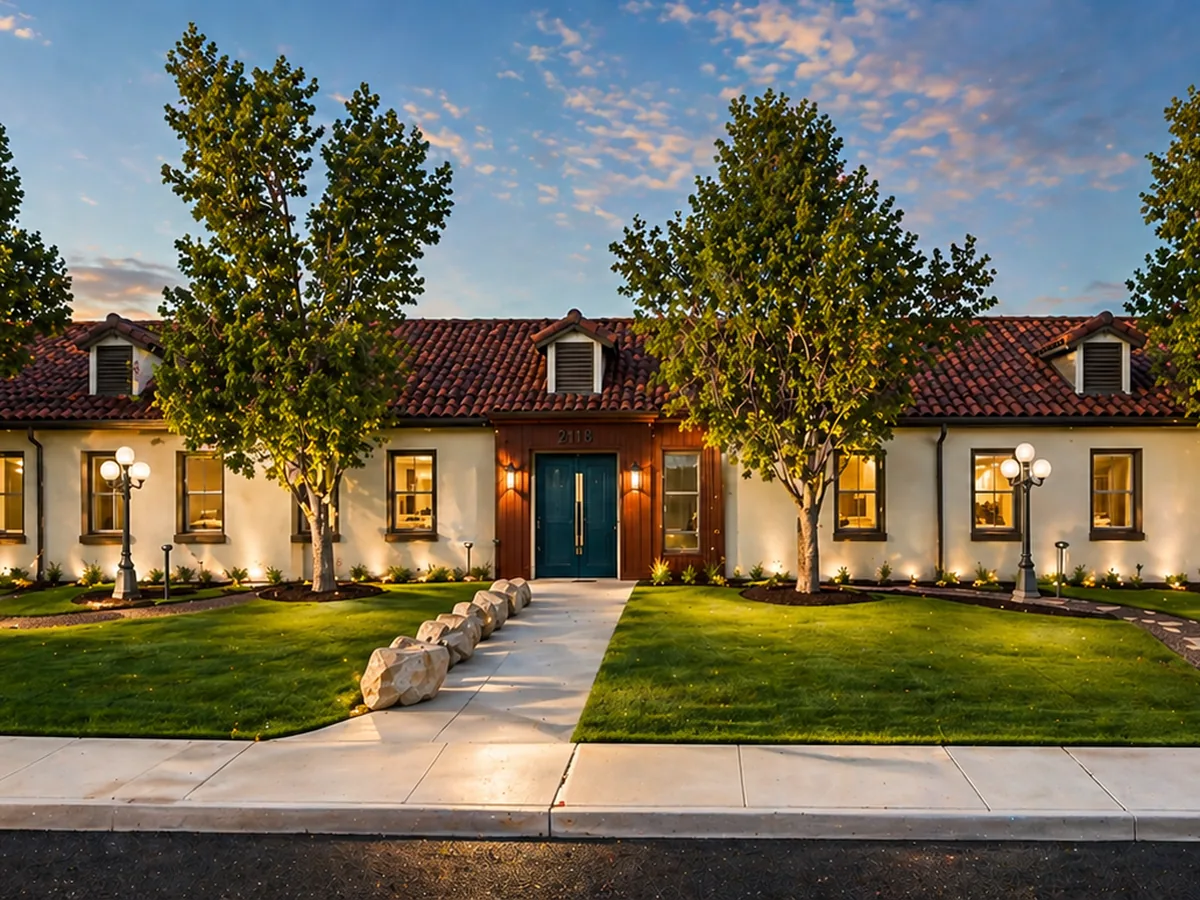
If and when the rules are finalized and a project qualifies, Fremont Developers may bring a senior-care fund built around QOZ 2.0 — in the rural Central Valley, where we already operate.
- Asset class: licensed residential care for the elderly (RCFE)
- Region: California Central Valley — rural, demand-driven, undersupplied
- Operator: Velora Senior Living, operated by Golden Years Living LLC
- Status: exploratory — no entity, no offering, no documents yet
This describes a possibility, not a plan of record. Any actual fund, structure, minimum, or terms would be set out in formal documents at the appropriate time — never on a marketing page.
Who Opportunity Zone investing tends to suit.
You have eligible capital gains
QOZ benefits apply only to eligible capital gains reinvested within the statutory window. Without a gain, the deferral and step-up do not apply.
You're an accredited investor
Any future private fund would be limited to accredited investors under SEC Rule 501. We use investor self-confirmation at the appropriate stage — no third-party gate on this page.
You can hold ~10 years
The full benefit package rewards a long horizon. Opportunity Zone investing is illiquid and suits capital with no near-term need.
This is not for you if you have no eligible capital gains, are not accredited, need liquidity inside ten years, want a guaranteed return, or cannot tolerate loss of principal in a future private investment.
From today to a potential 2027 close.
-
i.
Today → late 2026 · Watch the rules
Final Treasury regulations for QOZ 2.0 are expected in late 2026. New zone designations go through state nomination and federal certification. We track this and keep the interest list informed.
-
ii.
If a project qualifies · Evaluate
Only if a specific Central Valley senior-care site sits on a designated rural zone and the structure clears tax and securities counsel would Fremont Developers consider forming a fund.
-
iii.
2027 · Potential formation & formal materials
If it proceeds, formal documents would be prepared and shared with interested, accredited parties at that time. Capital gains realized within the statutory window before a close could be eligible. Nothing is committed until then.
-
iv.
~Year 5 and ~Year 10 · The benefits
For any eventual investor: a basis step-up around year five and potential full exclusion of appreciation after a ten-year hold — subject to the final rules and the project's performance.
Questions, answered plainly.
What is QOZ 2.0?
The informal name for the Opportunity Zone program as revised by the One Big Beautiful Bill Act (OBBBA), signed in July 2025. It makes the program permanent, uses a rolling deferral period, and adds an enhanced rural tier. New rules and designations are expected January 1, 2027. Final Treasury regulations are not yet issued.
What is a Qualified Rural Opportunity Fund?
A Qualified Opportunity Fund whose assets are deployed in a zone made up entirely of a rural area (broadly, outside a city/town over 50,000 and outside a contiguous urbanized area). It is described as receiving a 30% year-five basis step-up versus 10% for a standard fund, plus a reduced substantial-improvement threshold — subject to final regulations.
Is Fremont Developers offering a QOZ 2.0 fund right now?
No. There is no active offering. This page is educational and forward-looking only. We are exploring the potential of a 2027 senior-care fund. Nothing here is an offer to sell or a solicitation to buy any security, and registering interest creates no obligation on either side.
What are the three tax benefits?
Generally: (1) deferral of tax on an eligible reinvested capital gain; (2) reduction via a year-five basis step-up (10% standard, 30% rural under OBBBA); and (3) exclusion of appreciation if the fund interest is held at least ten years. Benefits depend on individual circumstances and final regulations.
What kind of project would a potential 2027 fund focus on?
Senior care — licensed residential care for the elderly (RCFE) in California's Central Valley, where Fremont Developers already operates communities under the Velora Senior Living brand. Any specific project and terms would be described in formal documents at the appropriate time.
Does California conform to the federal rules?
No. California does not conform to the federal Opportunity Zone rules. A California resident would generally owe state capital gains tax in the year of realization regardless of the federal deferral. All benefits described here are federal-only.
Who would a future fund be available to?
Accredited investors only, as defined by SEC Rule 501. Fremont Developers uses investor self-confirmation of accredited status via a questionnaire at the appropriate stage. This page collects no financial information and gates no documents.
What happens after I register interest?
You join an information list. If and when there is something concrete — finalized rules, a qualifying project, or formal materials — we reach out. No documents are sent automatically, no commitment is created, and you can ask to be removed any time.
Register your interest.
No documents, no commitment, no financial details. If a 2027 fund becomes real, you will be among the first to hear — and you can opt out any time.
This page is provided for general informational and educational purposes only. It is not tax, legal, or investment advice, and it does not constitute an offer to sell or a solicitation of an offer to buy any security. No fund, entity, or offering described or contemplated here currently exists; references to a potential 2027 senior-care opportunity fund are forward-looking and exploratory and may not occur. Any future private investment would be made available only to accredited investors as defined by SEC Rule 501, with accredited status self-confirmed by the investor, and only by means of formal offering documents furnished at that time. Statements about the Qualified Opportunity Zone program reflect the One Big Beautiful Bill Act of 2025 as understood on the date of this page; final Treasury regulations have not been issued and may change the rules described. Tax outcomes depend on individual circumstances and are not guaranteed. California does not conform to the federal Opportunity Zone rules. The Velora Senior Living communities referenced are operated by Golden Years Living LLC. Investing in private real estate involves substantial risk, including possible loss of principal; investments are illiquid and require a long-term commitment. Past performance is not indicative of future results. Consult your own tax, legal, and financial advisors before making any decision. © 2026 Fremont Developers.