
Inside a 58-Bed RCFE: How Velora Designs for Dignity
A behind-the-scenes look at the design decisions inside Velora's 58-bed Dos Palos community — from wayfinding and lighting to the culinary program and secured memory care wing.
Why 58 beds is the sweet spot
The first question people ask when we describe Velora Dos Palos is why it is sized the way it is. Fifty-eight beds is not an arbitrary number. In California, a Residential Care Facility for the Elderly (RCFE) between roughly 50 and 80 beds sits in a bed-count range where three things happen simultaneously: the community is large enough to employ a full-time licensed administrator, a registered nurse consultant, a culinary director, and a dedicated activities coordinator; it is small enough that every resident's name is known by every team member on every shift; and it is financially stable enough to survive a quarter of below-projection occupancy without compromising care. Below 50 beds the staffing math gets thin. Above 80 beds you begin to build institutions — corridors that are too long, dining rooms that echo, staff who see but do not know.
Fifty-eight is the number we and our operating team arrived at after touring communities across California, Oregon, and Arizona. It is the number at which the building still feels like a home, not a facility. We talk about this constantly with families: the deciding factor in whether a loved one thrives in senior living is almost never the square footage. It is whether the staff know the resident's name, their daughter's name, their grandchild's name, what they ate for breakfast three days ago, and which activities make them smile.
Lighting that tracks the sun
We made one design decision early in planning that has reshaped every downstream choice: the entire common-area lighting system is tunable-white and circadian-programmed. The light temperature in the dining room, the living room, and the corridor ceiling fixtures shifts across the course of the day — cooler (around 5000K) through the morning and late morning, warmer (around 3000K) through the afternoon, and warmer still (down to 2200K) in the two hours before bedtime. This is not decorative. There is now a substantial body of research — gerontology, circadian biology, and dementia care specifically — that shows older adults with more stable light exposure patterns experience less sundowning, better sleep-wake consolidation, less agitation in the evening hours, and measurable improvements in cognitive orientation.
Designing for circadian lighting is not expensive at construction time — the fixtures cost roughly 15% more than fixed-color equivalents — but it is nearly impossible to retrofit. Every community we have studied that installed tunable-white lighting at build has kept it. Every community that tried to retrofit has given up partway through. If you are touring a senior living community, ask whether the common-area lighting shifts across the day. The answer will tell you a great deal about how much research went into the building.
A tunable light system costs 15% more at construction. It is the single most impactful design investment we made. Retrofitting is effectively impossible — ask every community you tour whether it was built in.
Wayfinding for residents with cognitive decline
The most common physical-environment failure in older senior living buildings is wayfinding. Long identical corridors, repeated door configurations, and generic room numbering that looks like a hotel — these are design patterns that work fine for a forty-year-old visitor and are actively disorienting for a resident with early-to-moderate dementia.
Velora Dos Palos uses what gerontological designers call "progressive wayfinding cues." The corridors are broken into short segments, never more than twelve doors before a visual break — a widened gathering alcove, a change in flooring pattern, a different wall color. Each resident's door has a personal memory box beside it at a height of forty-four inches, which is the sitting-eye height for most residents. The memory box is a shadow-box display that families fill with photos, small objects, and reminders specific to the resident: a wedding photo, a baseball hat, a framed picture of a grandchild. Residents who cannot remember their room number can usually remember their wedding photo, and the memory box becomes the primary wayfinding cue for navigating back to their own door.
The corridors are painted in three different color families — a sage green corridor, a warm beige corridor, and a soft coral corridor — corresponding to the three resident wings. "I live down the sage hallway" is an easier cognitive handle than "Room 214." Flooring transitions match. Contrast between floor and wall is deliberately high (roughly 30% luminance contrast) because low-contrast floor-to-wall transitions have been linked to stumbles and falls in residents with diminishing depth perception.
The secured memory care wing
Sixteen of the 58 beds at Dos Palos sit inside a dedicated memory care wing. The wing is secured — meaning residents cannot exit without a staff member unlocking an egress door — but the design intent is that the residents living in the wing should not feel contained. The wing has its own secured outdoor garden (so residents can walk outside freely during daylight), its own smaller dining room (to reduce overstimulation at mealtimes), and its own activities space configured for the specific programming that works with memory care residents: music, gentle movement, tactile art, reminiscence therapy, and one-on-one social engagement rather than large-group programming.
The secured garden is a detail that gets compromised in many memory care facilities built on tight urban sites. The garden should not be a courtyard the residents look at through glass; it should be a garden the residents can walk through, sit in, plant in, and spend hours in on a nice day. At Dos Palos, the secured garden is 4,800 square feet of enclosed outdoor space with raised planting beds at wheelchair-accessible height, a looped walking path with no dead ends (continuous-loop paths reduce agitation by eliminating the "I'm stuck" moment that a dead-end path creates), and covered seating areas shaded for Central Valley summers.
Door hardware in the memory care wing uses concealed maglocks rather than visible keypads. The cognitive difference matters: a visible keypad is an invitation to a resident with moderate dementia to try to leave; a plain door, with a concealed lock controlled by staff proximity badges, registers as simply a door.
Culinary as a clinical tool
The most underrated lever in senior living quality is the food. Not because the food is social (it is), and not because eating well correlates with mood (it does), but because older adults in care settings often lose weight — unintentional weight loss is a leading contributor to decline — and the single most direct intervention is food they actually want to eat.
Velora runs a chef-led culinary program. The kitchen is staffed by a culinary director with prior experience in restaurant kitchens, not simply institutional food-service backgrounds. The dining room seats all 58 residents in a single service at small round tables of four to six, which is the configuration that gerontological research identifies as most conducive to social eating (large tables depress food intake in older adults; isolated single-table service worsens depression markers). Menu planning runs on a four-week rotation with seasonal Central Valley produce, and dietary modifications — pureed, mechanical soft, low-sodium, diabetic — are produced to the same aesthetic standards as the standard plate. A pureed meal at Velora looks like a meal. It is not a beige scoop on a tray.
We offer three seatings per meal — early, middle, and late — to accommodate different resident rhythms. No resident is woken up at 7 am for breakfast; a resident who sleeps until 9 is served breakfast at 9. This is a staffing decision, not a menu decision, and it reflects a broader philosophy: the community accommodates the resident's rhythm, not the other way around.
Family visiting spaces
Family members who visit a senior living community once a week — or once a month — are a more influential factor in resident well-being than almost any other external input. A community that makes visiting easy, pleasant, and private extends those visits and increases their frequency. A community that forces family visits to happen on the edge of the resident's bedroom or in a single institutional lounge shortens them.
Dos Palos has three dedicated family visiting spaces: a living-room-style lounge with a working fireplace for long afternoon visits, a private dining room where family can reserve a meal with their loved one, and a secured outdoor garden patio for weather-permitting visits. Children are explicitly welcomed — the private dining room has a small toy chest — and the building is designed so that an adult child visiting a parent with a toddler in tow does not feel like they have imposed.
The staff workflows in a great senior living community should be invisible to residents. The pill cart arrives because someone needs medication; the laundry gets delivered because the linens were changed. Residents experience hospitality, not operations.
Staff workflows that stay invisible
A common tell of an institutional-feeling senior living community is visible operations: med carts parked in corridors, laundry bins staged outside rooms, staff huddled at a nursing station during meal service. These are all operations that have to happen in any care facility. The design question is where they happen.
Dos Palos uses back-of-house corridors — service hallways running behind the resident-facing corridors — for med-cart staging, laundry delivery, and housekeeping prep. Nursing staff have a workstation inside each resident wing, but it is a small, enclosed alcove rather than a 1970s-style central nursing station. The goal is that a resident walking to dinner, a family member visiting, or a prospective resident touring the community does not see staff "at work" — they see staff interacting with residents.
This is not a cosmetic choice. The more the building feels like a home, the less the residents feel institutionalized, and the downstream effects on mood, agitation, and social engagement are measurable.
Securitas Arial nurse call integration
The clinical systems in a modern RCFE are substantially more sophisticated than they were even ten years ago. We selected the Securitas Healthcare Arial platform for nurse call, wander management, and staff communication. The system integrates a pendant call button worn by each resident, a wander-management perimeter for memory care, a real-time location system that lets staff know within seconds where a resident is if they don't respond to a call, and a staff communication layer that consolidates what used to be three or four separate systems into a single interface.
The practical effect: an average resident call response time under 90 seconds (the California regulatory standard is substantially looser), no reliance on radios or paper logs for shift-to-shift handoff, and a documentation audit trail that makes regulatory inspection straightforward. For families, the relevant takeaway is that if your loved one falls in their room at 2 am, a staff member is in the room faster than if they had called you on a phone.
None of this is marketing. These are the specific design decisions that separate a well-run 58-bed RCFE from an indifferent one, and they are the questions we encourage every family to ask on every tour. Velora Dos Palos opens in July 2026; tours are available now by appointment.
For a fuller view of the Velora firm, see our senior living hub. For investors interested in the economics of a well-designed senior living operation, our Velora Living Fund I page walks through the preferred-equity structure we use to fund FF&E and working capital into communities like this one.
Related
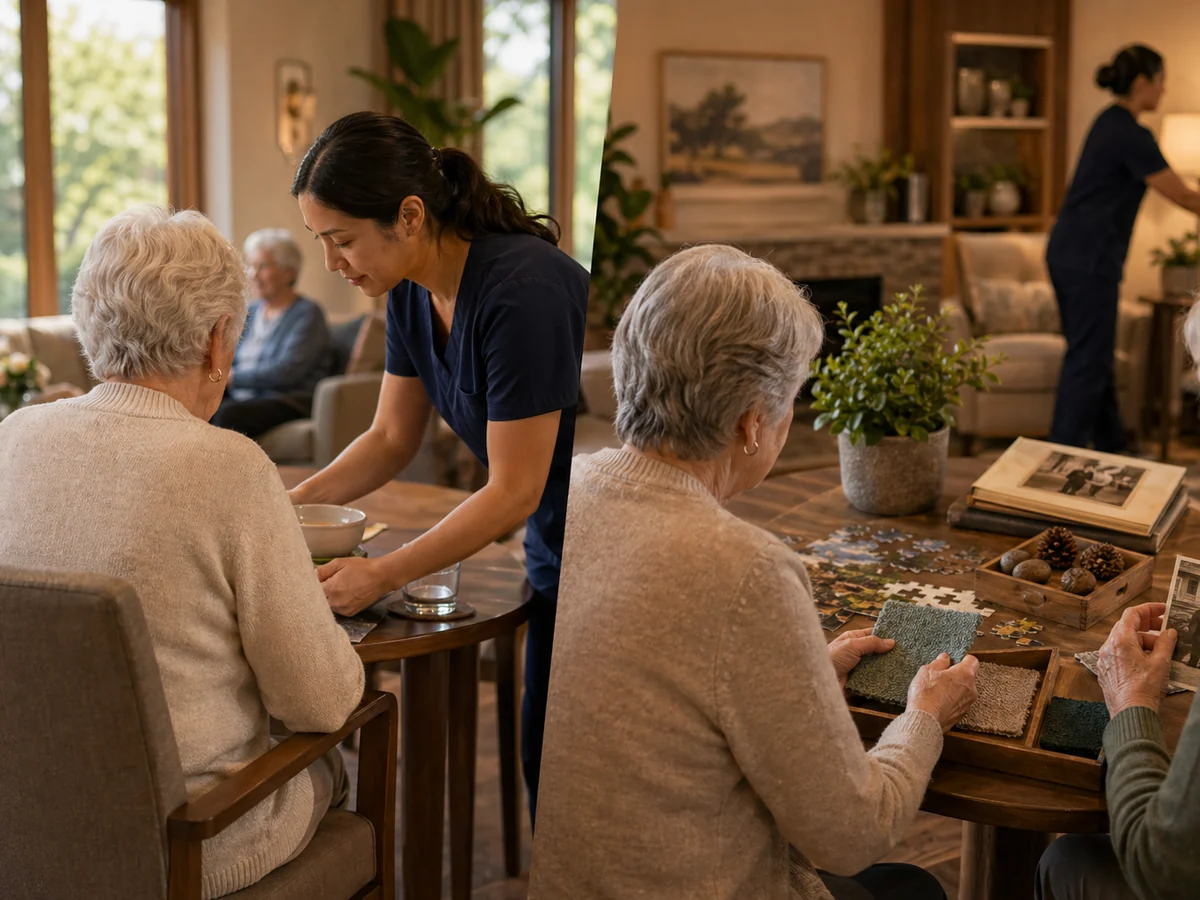
Assisted Living vs Memory Care: Choosing the Right Level for Your Parent
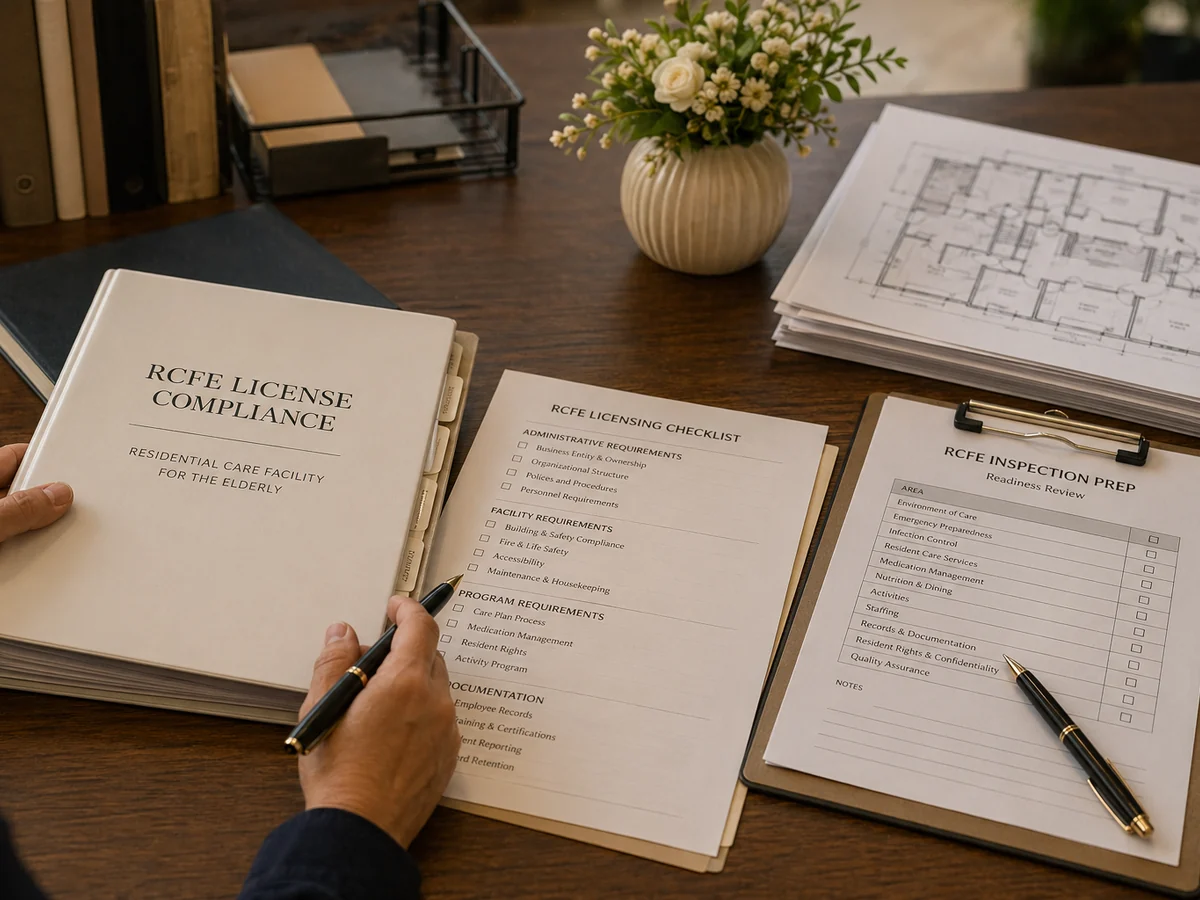
Understanding California RCFE Licensing: What Families Should Ask
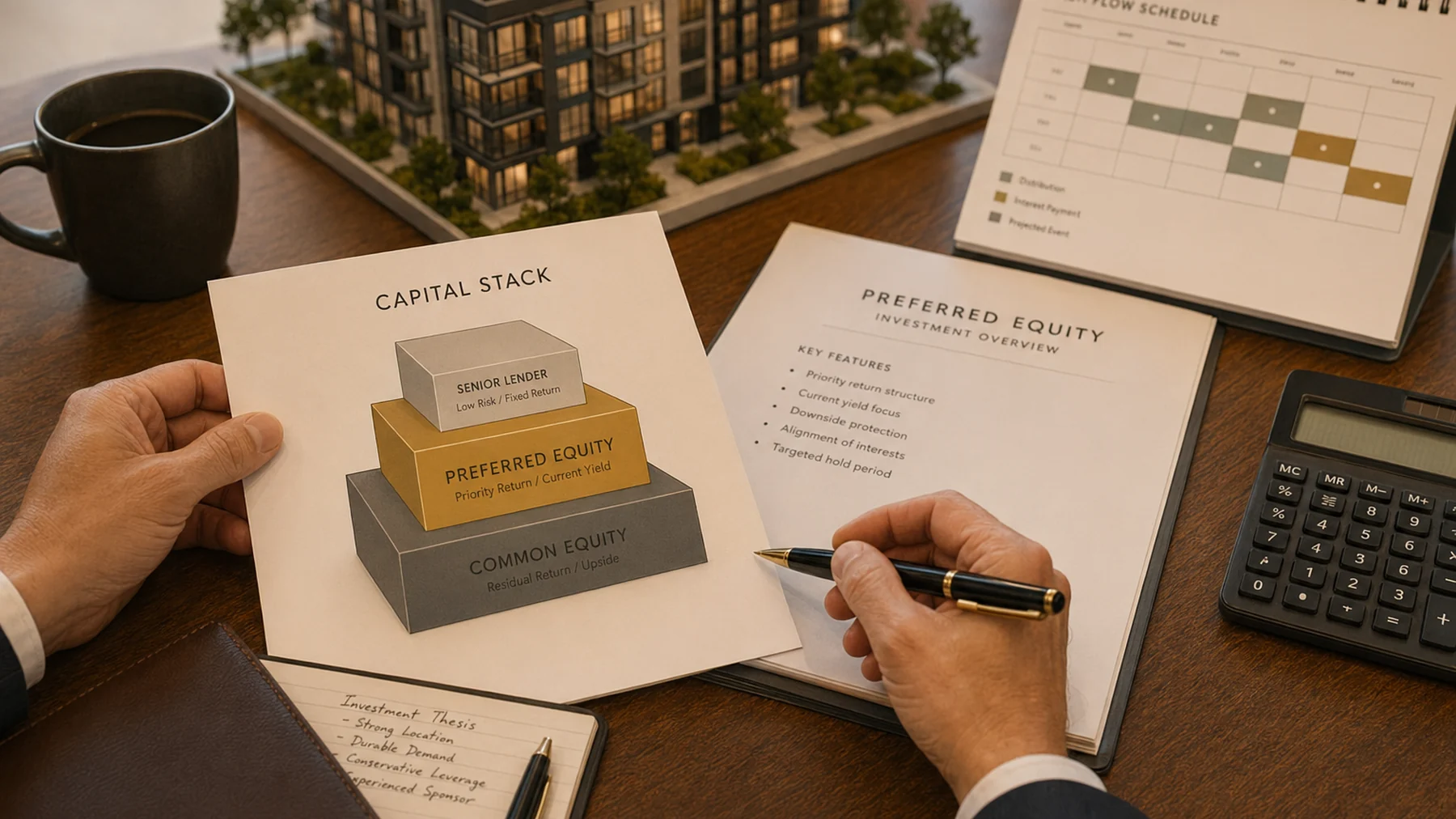
Preferred Equity vs Common Equity in Senior Living Syndications
See Velora Dos Palos in person.
Tours are available now by appointment. Families, referral partners, and health-care professionals welcome. Opens July 2026.