
Why Fremont's BART-Adjacent Development Is Undervalued Right Now
An analysis of why downtown Fremont — with BART access, Silicon Valley proximity, and active rezoning — represents an underpriced transit-oriented development opportunity in 2026.
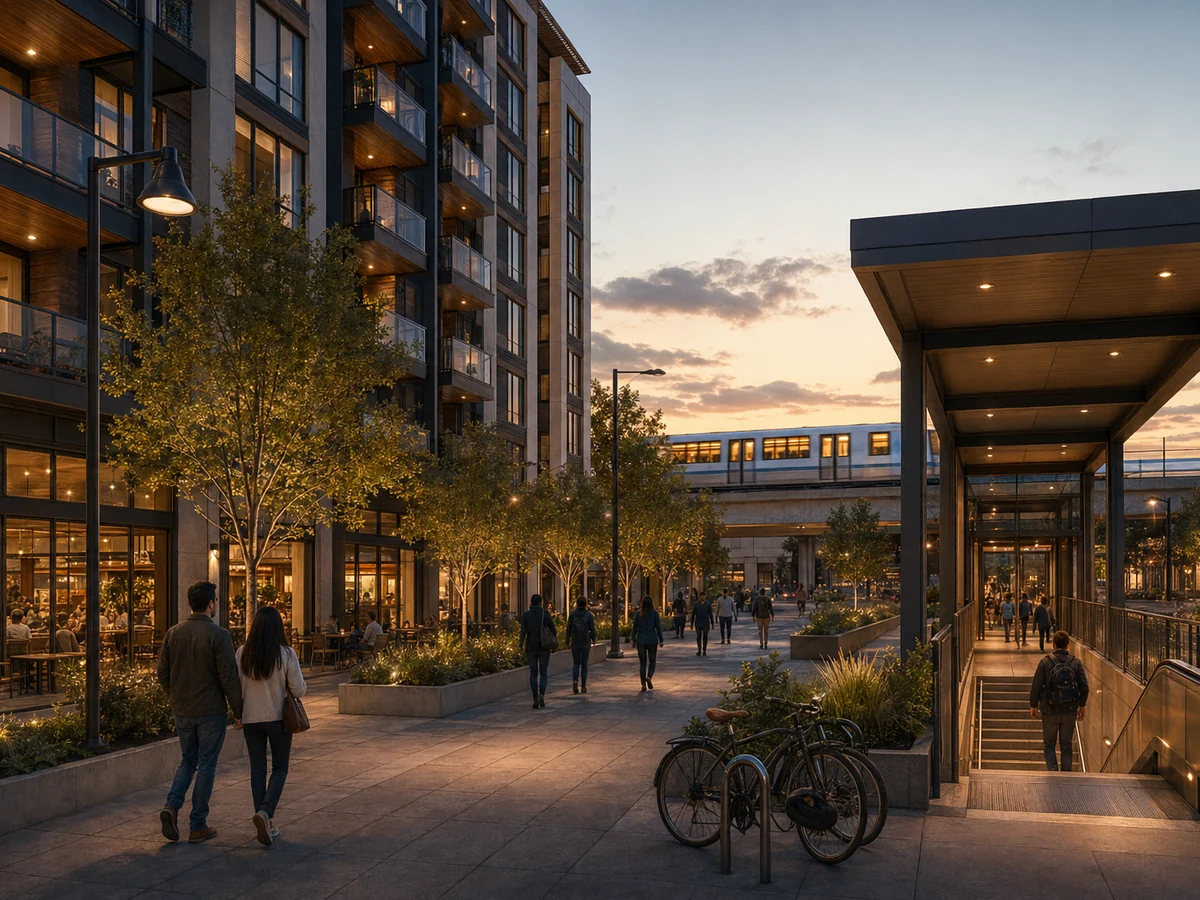
The East Bay's quietest growth story
If you're reading the Bay Area real estate press, the stories you see most often are about San Francisco office vacancy, Oakland retail distress, and the South Bay single-family repricing. What you do not see often is a story about Fremont. That is part of what makes it interesting. The city sits between the employers of Silicon Valley to the south, the refineries and ports of the Inner East Bay to the north, and the commuter rail infrastructure that ties all of it together. Fremont is California's fourth-largest city by population in the Bay Area. It has BART. It has Tesla's US vehicle-assembly footprint. It has a downtown general plan that has been rezoning aggressively for over a decade. And it rarely makes the front page — which is, historically, when supply gets built ahead of the demand that later finds it.
We have been building, buying, and operating in the Bay Area since 2001. We have underwritten sites in every submarket from Oakland to Gilroy. The pattern we see in downtown Fremont right now is not a gold rush. It is the opposite — a deliberate, under-narrated transition from an auto-oriented suburban grid into a transit-anchored multi-family market, with a local government that is actively permitting the conversion.
Who actually lives in Fremont
The demographic profile of Fremont is different from most conversation-starting Bay Area cities. Median household income in 2024 sat above $160,000 — higher than Oakland, higher than Hayward, higher than San Jose proper. The population skews toward technical professions, with a heavy concentration of engineering and biotech employment. Over 55% of adult residents hold a bachelor's degree or higher. The city is majority Asian-American, with strong Indian, Chinese, and Vietnamese communities, and a resilient middle-class homeownership base that predates the last two tech cycles.
What this produces, for a developer, is a renter pool that is unusually sticky. People who move to Fremont for an engineering job at Tesla, a biotech role in the nearby biomedical cluster, or a data-center gig in the Warm Springs innovation district do not relocate on a one-year lease cycle. They put down roots. Renters here stay longer than in most comparable Bay Area submarkets, which compresses the turnover cost side of the operating model.
The BART + Capitol Corridor equation
Fremont is unique in the East Bay in that it is served by two commuter-rail systems. BART's Warm Springs and Fremont stations connect the city to Oakland, Berkeley, and San Francisco to the north, and to Milpitas and Berryessa / North San Jose to the south, opening a one-seat ride into the core of Silicon Valley. Capitol Corridor, the Amtrak-operated intercity rail, adds Sacramento and San Jose connections with a stop at Fremont Centerville. For a renter, that means single-seat transit access to San Francisco, Oakland, Berkeley, and downtown San Jose — four separate employment cores — from one home address.
Transit access has always been priced into Bay Area rents, but it has historically been priced into the residential submarkets with the longest transit history: the Peninsula, parts of San Francisco, and North Berkeley. BART reached Fremont in 1972, but the development pattern around BART here remained dominated by surface parking lots and single-story retail until roughly the mid-2010s. The pricing-in of transit access on the land basis has been slower than in the neighborhoods that had BART at the same time but developed residential density earlier.
Two commuter rail systems. Four employment cores. One-seat rides to all of them. The rent math should have caught up years ago. In Fremont, it is still catching up.
Tesla and the semiconductor manufacturing base
The Tesla Fremont factory, the former NUMMI plant, produces over half a million vehicles per year and employs on the order of 20,000 people at the Fremont site. The broader south-Fremont industrial corridor hosts semiconductor fabs, battery R&D facilities, and biotech contract manufacturers. These are not remote-work jobs. They are in-person, shift-based, technical jobs that require the worker to live within a reasonable commute of the employer. The demand profile for these workers is different from the tech-office demand profile that has softened since 2022 — manufacturing employment does not unwind by going remote.
This employment base matters for an apartment underwriter in two ways. First, it provides a demand floor that is less exposed to the work-from-home shock that hit downtown San Francisco's multi-family market. Second, it produces income profiles — mid-career engineers and senior technicians with household incomes in the $150K to $350K band — that translate directly into absorption of luxury apartment product at market rents.
Why rents have room to grow
Average Fremont one-bedroom rents in 2025 ran in the high $2,000s, with two-bedrooms in the mid-to-high $3,000s. That is lower than comparable Peninsula cities on a cost-per-square-foot basis — often by 15% to 25% — despite a roughly comparable employment profile and faster single-seat transit access to San Jose than most Peninsula cities offer. The gap has narrowed over the last five years, but it has not closed. As new product comes online and renters price the transit and employment access correctly, the gap should continue to compress.
What closes the gap is not speculation. It is new, delivered, well-operated product that renters can compare to the existing housing stock. A 126-unit building with a rooftop, a pet spa, package management, and a three-minute walk to BART creates a different product category than a 1970s garden-style complex with surface parking and no amenity. The price-per-door rent differential between those two categories is the mechanism by which the market discovers the right rent level for the submarket.
The downtown rezoning and development pipeline
The City of Fremont adopted a Downtown Community Plan that permits significantly greater residential density along Capitol Avenue and within a defined downtown district. The plan pairs permitted density with transit-oriented design standards — ground-floor retail, pedestrian-scaled frontages, reduced parking ratios for sites near transit. Since adoption, Fremont's planning department has entitled a string of mixed-use projects along Capitol Avenue and in the broader downtown core.
Our own project, Capitol 101, sits at 3411 Capitol Avenue. 126 units, 14,000 square feet of ground-floor retail, LEED Silver target, three minutes' walk to BART, seven floor plans named after Fremont's neighborhoods. It is part of the pipeline, not the whole pipeline. We expect several additional mixed-use deliveries between 2026 and 2030 that, together, reshape the walkability and density of the downtown core. The name of that pipeline is the subject of another post we've written — Downtown Fremont in 2030 — and the combined impact on the submarket is cumulative, not project-by-project.
What makes Capitol 101 a test case
Capitol 101 is interesting as a data point for the thesis because it layers multiple Fremont-specific advantages on a single site. The parcel is inside a designated Qualified Opportunity Zone, which allows a federal tax-advantaged capital structure to improve the post-tax return for investors with realized capital gains. The site is three minutes' walk from BART. The stabilized NOI projects to $7.57 million annually, with a yield on cost of approximately 7.69% — a development spread that reflects an underwritten rent level that stays conservative relative to where we expect the submarket to clear by stabilization.
The investment thesis is not "Fremont rents will double." The investment thesis is that the submarket currently prices single-seat-transit access to four major employment cores at a 15% to 25% discount to comparable Peninsula submarkets, that the discount is compressing, and that a well-operated delivery into that compressing gap produces a durable income stream.
The investment thesis is not a prediction about rent growth. It is an observation about a persistent mispricing between what Fremont's transit and employment access should be worth and what the current rent roll says it is worth.
Risks
The thesis has three serious risks worth stating plainly. First, Bay Area construction costs remain elevated, and any further escalation in steel, labor, or financing rates compresses the development spread. Second, tech employment in the broader region is soft on the white-collar side, and a further round of layoffs could dampen the absorption assumption for luxury product, even with the manufacturing base as a buffer. Third, regulatory risk — entitled projects can be delayed by litigation, appeals, or policy changes at the city or state level.
The counter to each risk lives in the underwriting. We underwrite with a conservative exit cap rate, stress-test the absorption assumption against a weakened tech-employment scenario, and structure the capital stack so that the sponsor has the balance sheet to carry a delayed lease-up if the market needs a quarter or two to find the product. None of those defenses eliminates risk. Together, they change the shape of the bet from "Fremont must grow at X" to "Fremont must continue to offer what it already offers."
If you'd like to see the underwriting for a specific Fremont BART-adjacent position, or how Capitol 101 pencils against the submarket thesis, our project page has the public-facing numbers, and the full investor documentation is available through our investor channel. The Bay Area's quietest growth story has a way of becoming the loudest one eventually. It is better to hold the position before that sentence is true.
Related
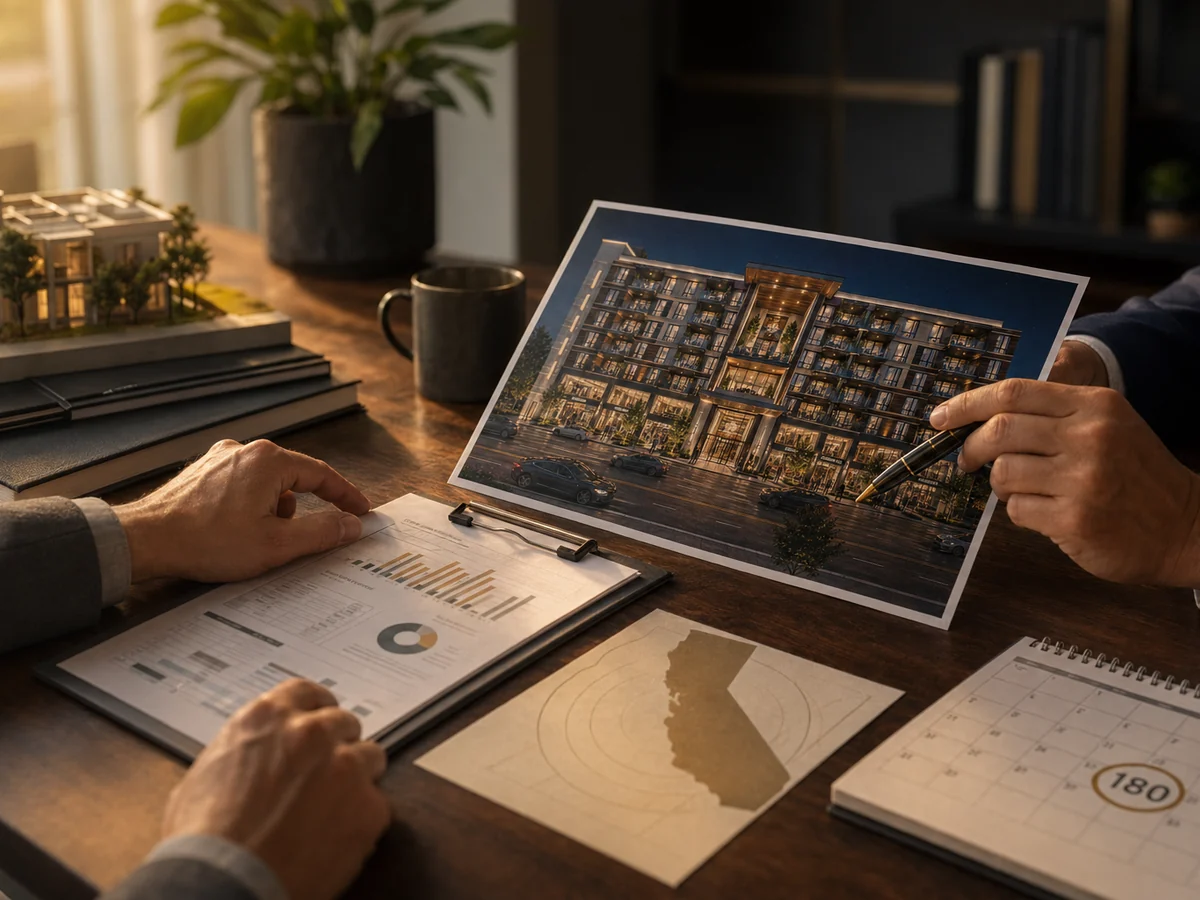
Qualified Opportunity Zones Explained: A Bay Area Investor's Guide to 2026
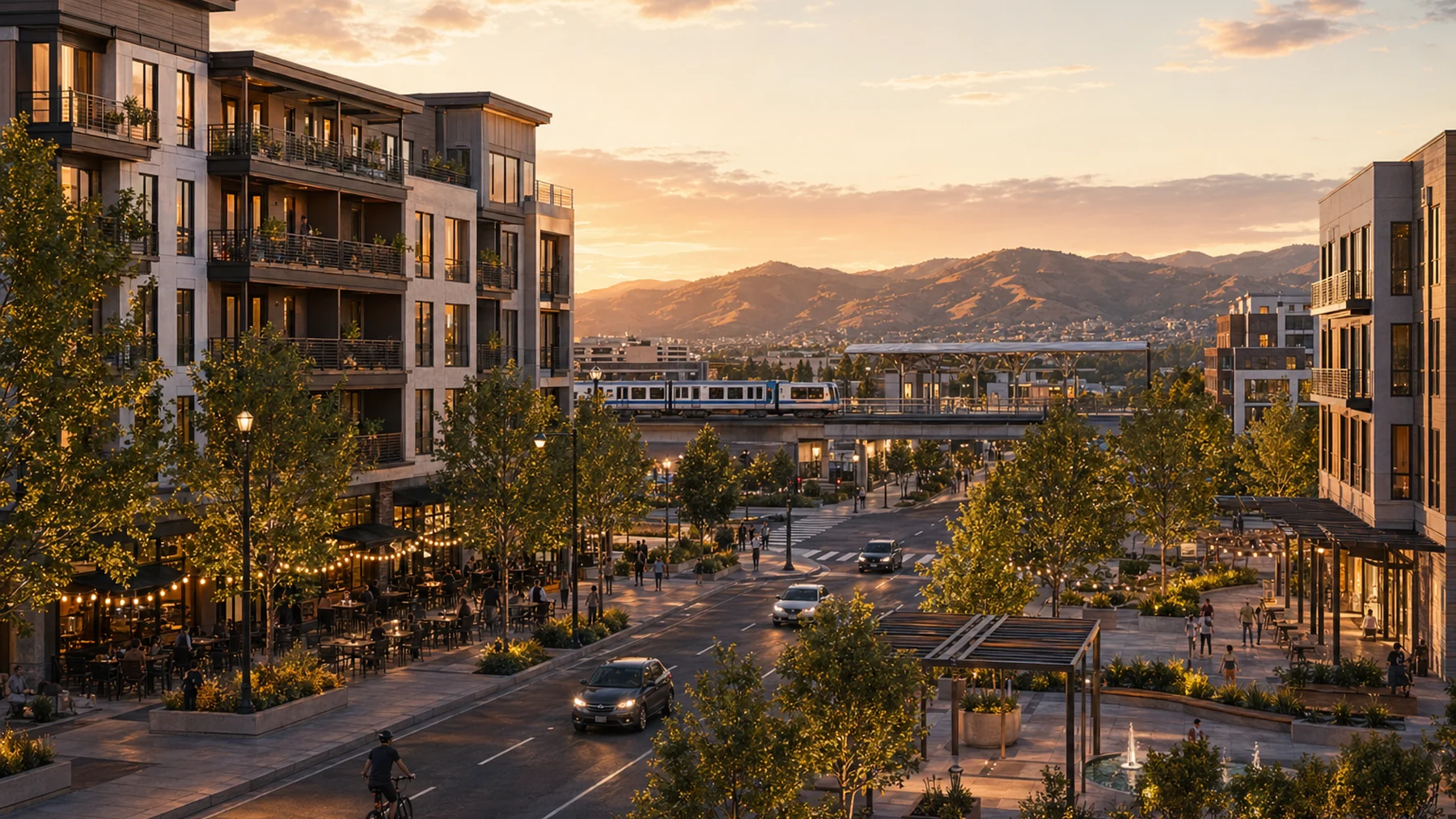
Downtown Fremont in 2030: The Development Pipeline You Should Know About
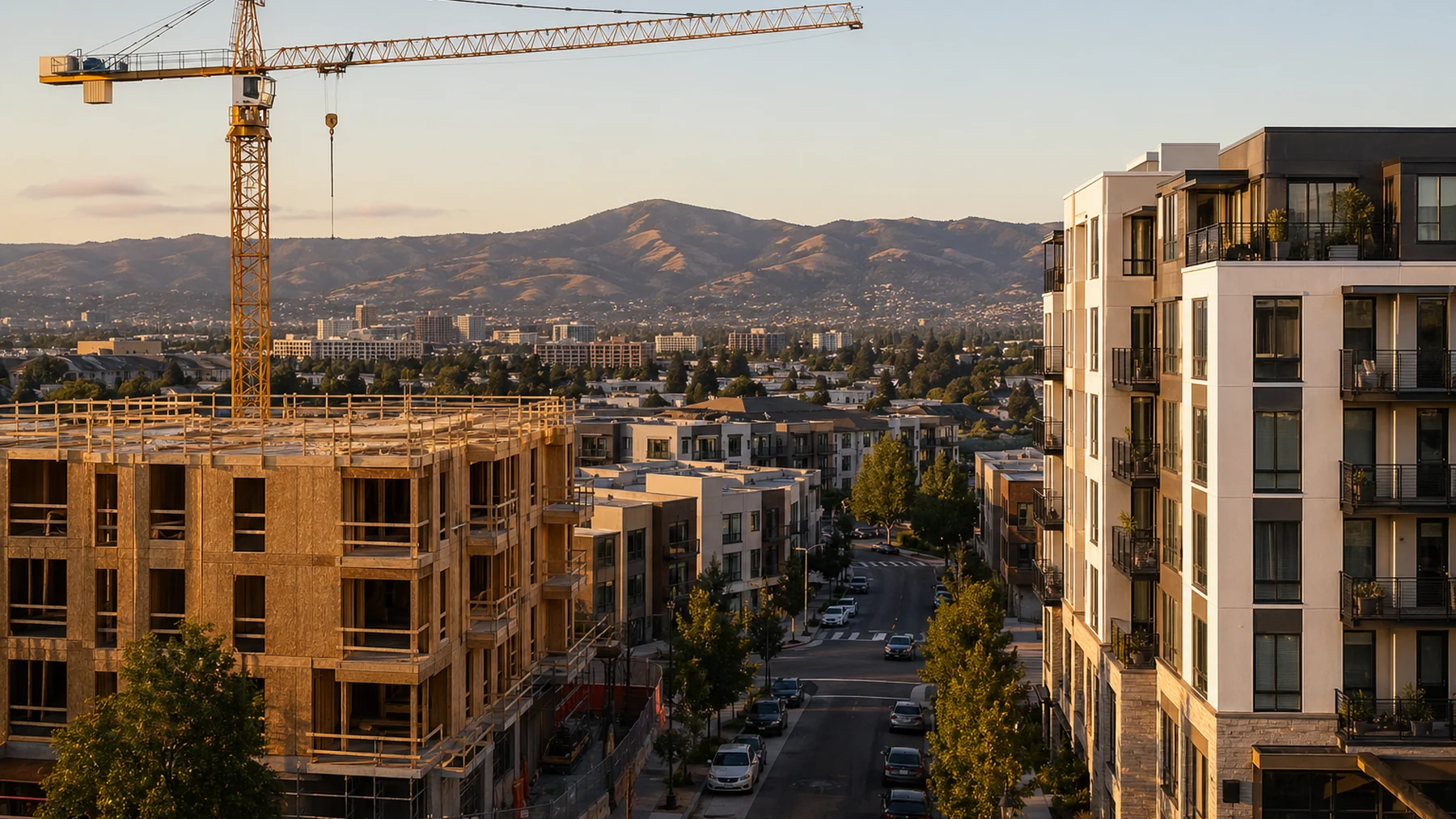
The Bay Area Housing Crunch and What 126 New Homes Mean for Fremont
See the numbers behind Capitol 101.
126 apartments. 14,000 sq ft of retail. Three minutes to BART. The Fremont thesis, underwritten.